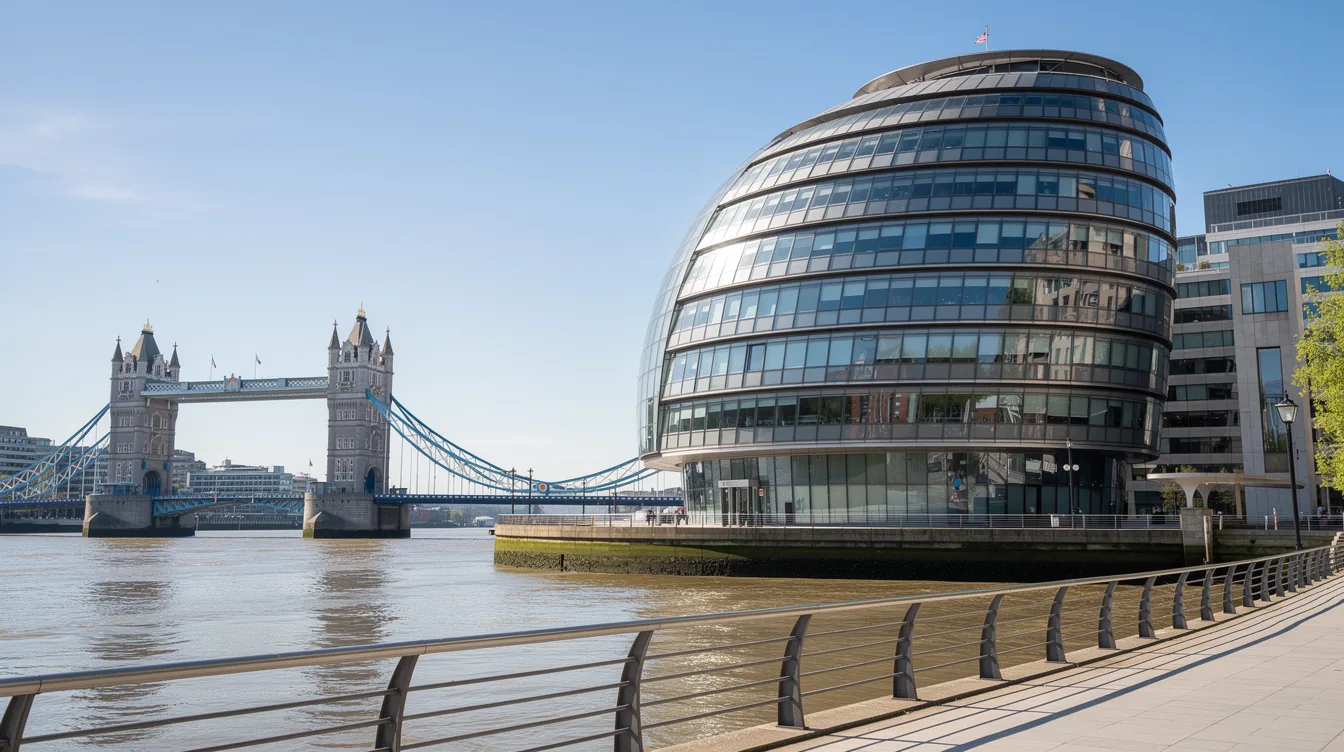
The Greater London Authority confirmed at the start of May that it has commissioned a fresh review into the impact of soaring service charges on London's housing affordability. The probe, led from City Hall and run with the London Housing Panel, will look at how charges vary by tenure and building type, how fast they have grown, and what is actually driving the figures on a leaseholder's annual statement.
The number in front of the announcement was uncomfortable. The London Assembly housing committee last year put the average London leaseholder service charge at £3,912 a year. Across England and Wales, the average has now passed £200 a month for the first time, according to Hamptons. For a short lease flat owner trying to sell, that figure is more than just a recurring bill - it is one of the first things a buyer will see, and it shapes how many of them are willing to make an offer.

What the GLA is actually doing
The probe is not a new piece of legislation, and the Mayor does not have direct power to cap service charges. Instead, the GLA is producing research that will feed into both the London Plan and the Mayor's lobbying position with central government as the Draft Commonhold and Leasehold Reform Bill works its way through Parliament. The full scope is set out on the London City Hall investigations page.
Three things are being looked at in detail:
- How charges vary across the capital. Headline averages mask wide variation between buildings, between boroughs, and between traditional leasehold and shared ownership. The research will try to map that.
- How fast charges have grown. The average UK service charge has risen 32.6 per cent over the last five years, against CPI of 30.9 per cent. Insurance, energy and remediation costs are the usual culprits, but transparency on the actual breakdown remains poor.
- What is driving the rises. Building safety remediation under the post-Grenfell regime, insurance premiums, and managing agent fees are all feeding through. The probe will try to separate the unavoidable from the avoidable.
The Mayor already operates a voluntary service charges charter for housing providers, but its compliance is patchy and it does not bind private freeholders. The new probe is the first formal piece of GLA research dedicated specifically to the affordability question.
Why this matters more for short lease flats
If your flat has a long lease, a high service charge is a separate problem from your lease length. They both affect saleability, but they sit in different parts of a buyer's mental sums. If your lease is below 80 years, the two stack on top of each other, and that is what makes the City Hall probe relevant to short lease owners specifically.
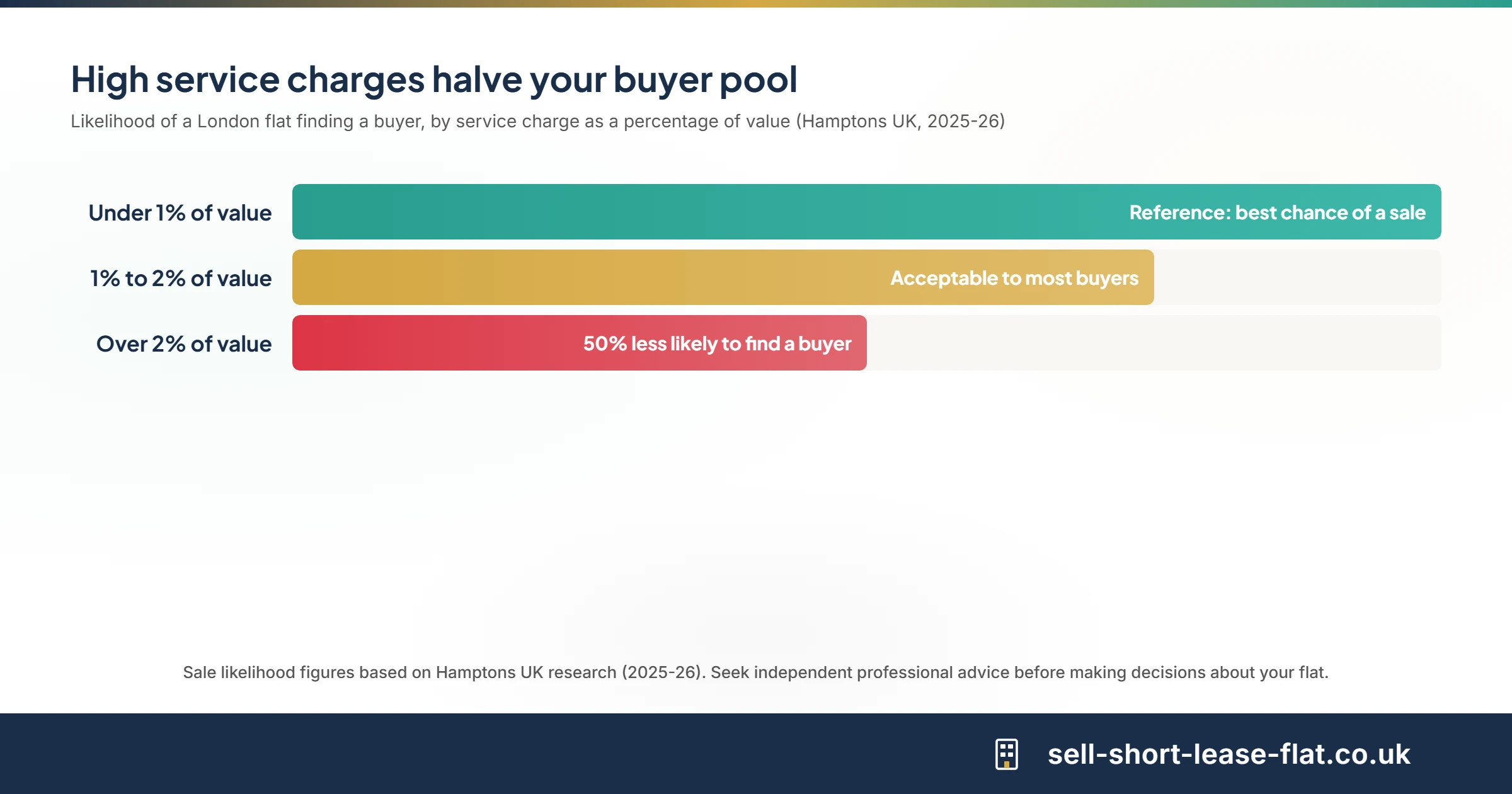
Hamptons research released earlier in 2026 found that London flats marketed with a service charge at or below 1 per cent of the property value were 50 per cent more likely to find a buyer than flats with charges at 2 per cent or more. Five years ago, 34 per cent of UK flats had a service charge under £100 a month. Today only 14 per cent do. The cheap-to-run flat is becoming a smaller and smaller share of the market.
For a short lease seller, the practical reading is uncomfortable. You are already negotiating with a smaller buyer pool because of the lease, and a high service charge can shrink that pool again. A flat with a 65-year lease and a £4,000 annual charge is a much harder sell than the same flat with a £1,500 charge - even though the lease is identical.
What the existing reform package does and does not do
The City Hall probe sits alongside two pieces of central-government work that short lease owners are already tracking: the still-pending parts of the Leasehold and Freehold Reform Act 2024 (LAFRA), and the Draft Commonhold and Leasehold Reform Bill published in January 2026. Housing Minister Matthew Pennycook has said the Government is "determined" to switch on the LAFRA service charge measures, which are intended to standardise statements, force greater transparency, and rebalance the legal costs regime so that leaseholders can challenge their landlord without prohibitive risk.
What none of those measures do is reduce the underlying cost. Better statements and clearer challenges help in the medium term, but they do not bring next year's bill down on a building where the freeholder has set a high reserve fund or where the insurance premium has doubled. The probe at City Hall is one of the few pieces of work that focuses on the affordability question rather than the procedural one.
For more on the wider service charge reforms already in motion, see our earlier piece on ground rent and service charge reforms, and our breakdown of which provisions of LAFRA are actually in force.

If you are selling a short lease flat now
Three practical things to think about while the GLA review runs:
- Know your number. Pull your most recent service charge demand and divide the annual figure by your current flat valuation. If the result is above 2 per cent, you are in the bracket where the Hamptons data suggests buyer interest drops sharply. That is useful context for any pricing conversation.
- Be transparent up front. Buyers who are surprised by a high service charge after their offer is accepted often walk. Buyers who are told up front and still proceed are far more likely to complete. For short lease flats this matters double, because conveyancing already takes longer.
- Account for it in your minimum offer. A high service charge is functionally part of the discount your buyer is looking for. If your lease is short and the charge is high, the asking price needs to reflect both. See our guide on how a short lease affects your flat's value, and on your selling options compared for the full picture.
The City Hall probe is welcome, but it is research, not relief. Its findings will probably inform the next London Plan and feed into the Mayor's lobbying line, but it will not lower your charge in 2026. For short lease owners weighing up whether to wait, that is the part to internalise. The transparency reforms in LAFRA may eventually arrive, the Draft Bill may eventually get to Royal Assent, and the GLA may eventually publish recommendations - but each of those is a different timeline, and none of them will be in place before your next service charge demand lands.
Where to read more
The official GLA investigation page is on london.gov.uk. The Leasehold Advisory Service service charge fact sheet is the clearest plain-English explanation of what your freeholder can and cannot charge for. For ongoing reform updates, the Gov.uk leasehold reform collection remains the easiest single page to bookmark. Since this piece, the Government has confirmed a package of service charge rules, which we cover in new service charge rules confirmed: what sellers should know.
If you want a clear, no-pressure valuation that already factors in your service charge and lease length, get in touch. We specialise in short lease flats across London and the rest of the UK and there is no obligation either way. Our step-by-step guide to selling a short lease flat walks through the full process.